Contents:
- Why Some Flowers Thrive in Containers and Others Struggle
- Top Container Flowers by Sun Exposure
- Full Sun (6+ Hours Daily)
- Partial Shade (3–6 Hours)
- Seasonal Container Flowers: Spring, Summer, and Fall
- Regional Considerations: Matching Container Flowers to Your Climate
- The Best Container Flower Combinations
- Practical Tips for Container Flower Success
- An Eco-Friendly Angle Worth Adopting
- FAQ: Container Flowers
- What container flowers bloom all summer?
- How deep does a container need to be for flowers?
- What container flowers are drought tolerant?
- Can perennials grow in containers?
- What are the best container flowers for shade?
- Planning Your Next Container Season
Step onto almost any urban balcony in July and you’ll catch the faint sweetness of petunias drifting through warm air, vivid magenta and white blooms spilling over the rim of a terracotta pot like a slow-motion waterfall. Container gardening makes that kind of beauty possible anywhere — a narrow stoop, a rooftop, a fire escape with six inches of railing. But not every flower adapts gracefully to life in a pot. Choosing the right container flowers is the difference between a lush display that carries you through October and a pot of wilted disappointment by mid-July.
This guide goes beyond the basic list. It covers why certain plants excel in confined root zones, how regional climate shapes your choices, which combinations actually work together, and how to approach container planting with a lighter ecological footprint.
Why Some Flowers Thrive in Containers and Others Struggle
Containers impose real constraints: limited root volume, faster moisture loss, and temperature swings that in-ground plants never experience. A pot sitting on a concrete patio in direct sun can reach soil temperatures of 130°F or higher — hot enough to damage roots and kill beneficial soil microbes. Plants that succeed in this environment tend to share a few traits: fibrous or compact root systems, moderate-to-high drought tolerance once established, and a growth habit that responds well to deadheading or natural self-cleaning.
Tap-rooted plants like lupine or large poppies rarely perform well long-term in pots. Their roots need depth and cool, stable soil conditions. Conversely, plants bred or selected for hanging baskets and window boxes — calibrachoa, verbena, and trailing petunias — are genetically optimized for exactly the conditions containers create.
Top Container Flowers by Sun Exposure
Full Sun (6+ Hours Daily)
These performers were practically made for sun-drenched patios and south-facing balconies:
- Petunias — The undisputed workhorses of container gardening. Wave and Supertunia series produce blooms from May through hard frost, self-clean reasonably well, and come in over 100 named varieties. Space them 10–12 inches apart in a 14-inch pot for the best cascade.
- Lantana — Heat-tolerant to extremes, lantana thrives where other plants sulk. It’s a pollinator magnet, drawing swallowtail butterflies and native bees. A single 4-inch transplant will fill a 10-inch pot by midsummer.
- Zinnias — Direct-sow seeds into a 12-inch container and thin to 3–4 plants. Profusion series zinnias are mildew-resistant and compact at 12–18 inches — ideal for containers where taller varieties would become top-heavy.
- Calibrachoa (Million Bells) — Self-cleaning and prolific, calibrachoa bloom continuously without deadheading and handle the heat-stress cycle of containers better than many alternatives.
- Portulaca — Thrives in shallow containers as little as 6 inches deep. Its succulent leaves store moisture, making it one of the most drought-forgiving flowering annuals available.
Partial Shade (3–6 Hours)
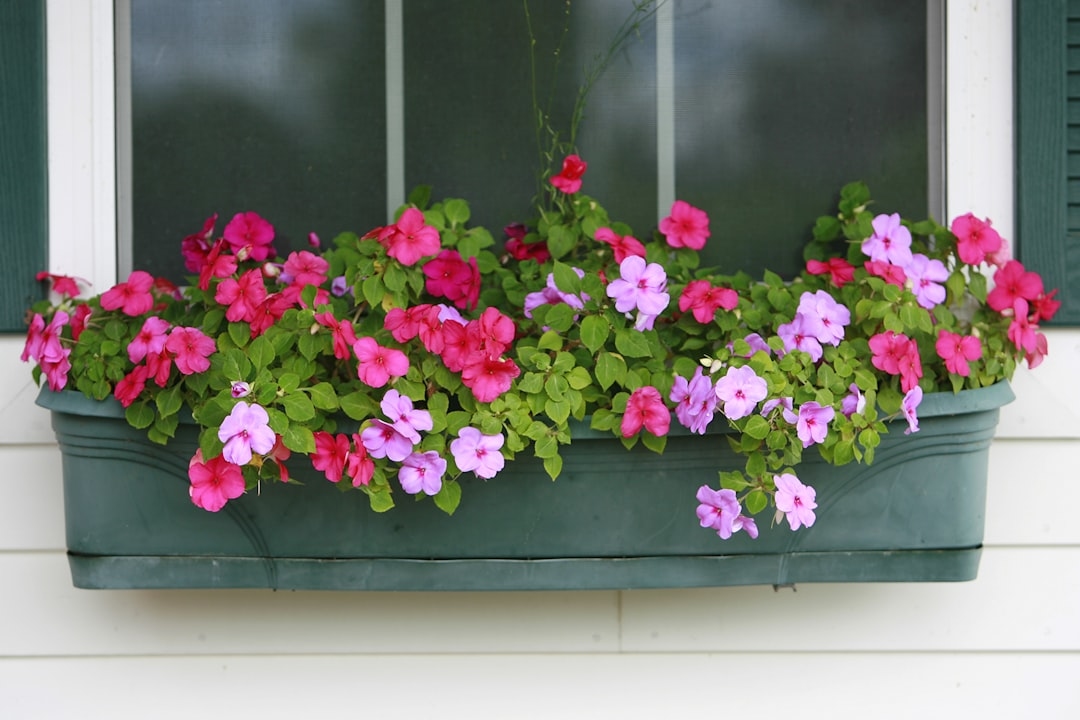
- Impatiens — The classic shade container flower. New Guinea impatiens handle more sun than standard types and produce 2–3 inch blooms in vivid coral, red, and orange. Water consistently; they wilt fast under drought stress.
- Begonias — Dragon Wing and Nonstop series begonias are exceptional container performers. Dragon Wing varieties can reach 18 inches and bloom without deadheading from spring through frost.
- Fuschia — Spectacular in hanging baskets in cool climates, with pendulous bicolor blooms in deep magenta and purple. They struggle in prolonged heat above 85°F.
- Torenia (Wishbone Flower) — An underused gem that blooms freely in dappled shade. The two-toned tubular flowers resemble miniature snapdragons and attract hummingbirds.
Seasonal Container Flowers: Spring, Summer, and Fall
A sophisticated container garden doesn’t stay static through the seasons. Smart gardeners plan three rotations per year.
Spring (Zones 5–8, March–May): Pansies tolerate light frost down to 26°F and perform best when daytime temperatures stay under 65°F. Pair them with violas and snapdragons for a cool-season display that often lasts into early June.
Summer (All Zones, June–September): This is peak container season. Petunias, lantana, geraniums, and calibrachoa form the backbone of most displays. Add angelonia for vertical interest — it reaches 18–24 inches, tolerates drought, and smells faintly of grape candy.
Fall (Zones 5–9, September–November): Swap out heat-spent annuals for ornamental kale, flowering kale, mums, and pansies again. Celosia (cockscomb) extends color through light frosts and dries beautifully for indoor arrangements.
Regional Considerations: Matching Container Flowers to Your Climate
Geography shapes container gardening more than most guides acknowledge.
Northeast (Zones 4–6): The growing season is short but intense. Prioritize fast-maturing annuals. Impatiens and begonias fill shade containers reliably, while petunias and geraniums cover sunny spots. Overwintering tender perennials like geraniums indoors is worth the effort — a $4 plant becomes a $20 shrub-sized specimen by year two.
South and Gulf Coast (Zones 8–10): Heat and humidity are the twin adversaries. Vinca (periwinkle) thrives where impatiens die of downy mildew. Pentas produces star-shaped blooms beloved by monarch butterflies and handles 95°F days without complaint. Caladiums provide color in shade where flowering plants struggle.
West Coast (Zones 9–10, Mediterranean climates): Mild temperatures allow year-round container displays. Osteospermum (African daisy), diascia, and nemesia thrive in the cool coastal air that exhausts Gulf Coast gardeners. In inland California valleys, heat spikes challenge even sun-lovers — prioritize lantana, portulaca, and vinca for summer survival.
Mountain West (Zones 3–5): Short seasons, intense UV, and dramatic temperature swings demand toughness. Calibrachoa, marigolds, and zinnias direct-sown in late May fill containers quickly and handle the dryness of high-altitude air.
The Best Container Flower Combinations
The “thriller, filler, spiller” formula remains the most reliable framework for designing a container. One tall thriller anchors the arrangement; a mounding filler creates volume; a trailing spiller softens edges.
- Classic Cottage: Upright geranium (thriller) + alyssum (filler) + bacopa (spiller)
- Tropical Drama: Purple fountain grass (thriller) + lantana (filler) + sweet potato vine (spiller)
- Pollinator Patch: Angelonia (thriller) + pentas (filler) + calibrachoa (spiller)
- Cool-Season Display: Snapdragon (thriller) + pansy (filler) + viola (spiller)
In a 16-inch pot, three to five plants is typically the right density. Overcrowding looks lush for two weeks, then creates air circulation problems that invite fungal disease.
Practical Tips for Container Flower Success
Potting mix matters more than fertilizer brand. Use a high-quality peat- or coir-based potting mix, never garden soil. Garden soil compacts in containers, reducing drainage and root oxygen. A 2-cubic-foot bag of premium mix (around $12–$16) fills approximately three 12-inch pots.
Water by weight, not schedule. Lift the pot — if it feels light, water deeply until it drains from the bottom. In July heat, a 12-inch pot may need watering every 24–36 hours. Self-watering containers with reservoirs can reduce frequency by 50%.
Fertilize consistently. Container flowers exhaust nutrients fast through repeated watering. A slow-release granular fertilizer (like Osmocote 14-14-14) applied at planting, combined with a liquid bloom booster every 2 weeks from July onward, produces noticeably better results than either alone.
Deadhead strategically. Petunias, geraniums, and marigolds bloom more heavily with consistent deadheading. Calibrachoa, lantana, and impatiens are self-cleaning — skip this step and spend that time on something else.
An Eco-Friendly Angle Worth Adopting
Peat-based potting mixes are effective but environmentally costly — peat bogs store enormous amounts of carbon and take thousands of years to form. Coir-based mixes (made from coconut fiber, a byproduct of coconut processing) perform comparably in most container applications and carry a significantly lower carbon cost. Several brands, including Burpee Organic and FoxFarm, now offer coir-dominant mixes at similar price points to conventional peat mixes. Choosing them is a small shift with a measurable impact.
Similarly, selecting pollinator-friendly container flowers — lantana, pentas, calibrachoa, and angelonia — turns a decorative pot into a functional ecological asset, especially in urban environments where native plantings are scarce.
FAQ: Container Flowers
What container flowers bloom all summer?
Petunias, calibrachoa, lantana, geraniums, impatiens, and vinca all bloom continuously from late spring through the first hard frost in most US climates with regular watering and fertilizing.
How deep does a container need to be for flowers?
Most annual flowering plants need a minimum of 8–10 inches of soil depth. Larger plants like geraniums, angelonia, and ornamental grasses perform better in 12–14 inch deep containers. Shallow-rooted options like portulaca and alyssum tolerate 6-inch depths.
What container flowers are drought tolerant?
Portulaca, vinca, lantana, gazania, and celosia are the most drought-resilient container flowers available. They can tolerate missing a watering cycle without significant damage in most conditions.
Can perennials grow in containers?
Yes. Coneflowers (Echinacea), black-eyed Susans, lavender, and salvia all grow in containers. They typically need larger pots (14–18 inches) and may require winter protection in Zones 5 and below, since container roots freeze faster than in-ground roots.
What are the best container flowers for shade?
Impatiens, begonias (especially Dragon Wing and wax types), fuschia, torenia, and caladiums are the strongest performers in shaded containers. New Guinea impatiens tolerate more sun than standard varieties and produce larger individual blooms.
Planning Your Next Container Season
The most successful container gardens start in late winter, not at the garden center in May. Ordering from specialty mail-order nurseries — which often ship rooted cuttings of superior cultivars unavailable locally — gives you access to varieties that serious growers use. Companies like Proven Winners, Suntory Flowers, and Ball Horticultural release new cultivars each year with improved heat tolerance, disease resistance, and longer bloom periods than the previous generation.
Browse the upcoming season’s catalogs in January, identify the combinations you want, and have your containers, potting mix, and fertilizer staged before your last frost date. That preparation turns a reactive hobby into a deliberate practice — and the results show in every bloom that follows.