
Contents:
- Why Low Maintenance Flowers Are Worth Choosing
- The Best Low Maintenance Flowers by Type
- Coneflowers (Echinacea purpurea)
- Black-Eyed Susans (Rudbeckia hirta)
- Marigolds (Tagetes)
- Lavender (Lavandula angustifolia)
- Daylilies (Hemerocallis)
- Practical Tips for Getting the Most Out of Easy-Care Blooms
- Eco-Friendly Choices That Help the Whole Yard
- Frequently Asked Questions
- What are the easiest flowers to grow for beginners?
- What low maintenance flowers come back every year?
- What flowers need the least water?
- Can low maintenance flowers grow in poor soil?
- How do I keep low maintenance flowers blooming longer?
- Your Next Step
What if you could have a yard full of color from May through October — without spending every weekend watering, deadheading, or spraying for bugs? That’s exactly what low maintenance flowers make possible, and the options are better than most people realize.
Gardening doesn’t have to be expensive or exhausting. With the right plant choices, even a complete beginner can grow something that looks intentional, lush, and alive. Let’s get into the ones that actually deliver.
Why Low Maintenance Flowers Are Worth Choosing
Most people abandon their gardens not because they stop caring — but because they picked plants that demanded too much. High-maintenance annuals need replanting every year. Fussy perennials sulk if the soil pH is off by half a point. That cycle gets old fast, and it gets expensive.
Low maintenance varieties, by contrast, are bred or naturally suited to handle heat, drought, poor soil, and neglect. Many are native to North America, which means they evolved to thrive in local conditions without any intervention from you. That’s also an eco-friendly win: native plants support pollinators like bees and monarch butterflies, require less water, and rarely need synthetic fertilizers or pesticides.
A single established perennial clump can live 10 to 20 years and spread on its own. Compare that to $30–$50 per season on annuals, and the math gets very clear, very fast.
The Best Low Maintenance Flowers by Type
Coneflowers (Echinacea purpurea)
Coneflowers are the gold standard of easy-care gardening. They’re native to the eastern and central US, thrive in USDA hardiness zones 3–9, and bloom from midsummer through fall with almost zero help. Once established — usually after their first full season — they’re genuinely drought-tolerant. Plant them in full sun, water weekly for the first year, and then mostly leave them alone.
Goldfinches love the seed heads in fall, so skip the deadheading and let the birds do the cleanup. You get a pollinator garden and a bird feeder in one plant.
Black-Eyed Susans (Rudbeckia hirta)
Few flowers deliver more visual bang per dollar. Black-eyed Susans bloom in vivid golden yellow for 8 to 10 weeks, often starting in June. They self-seed generously, meaning a single $4 plant can become a dozen by year three. They handle clay soil, heat waves, and the occasional missed watering without complaint. Zones 3–9.
Marigolds (Tagetes)
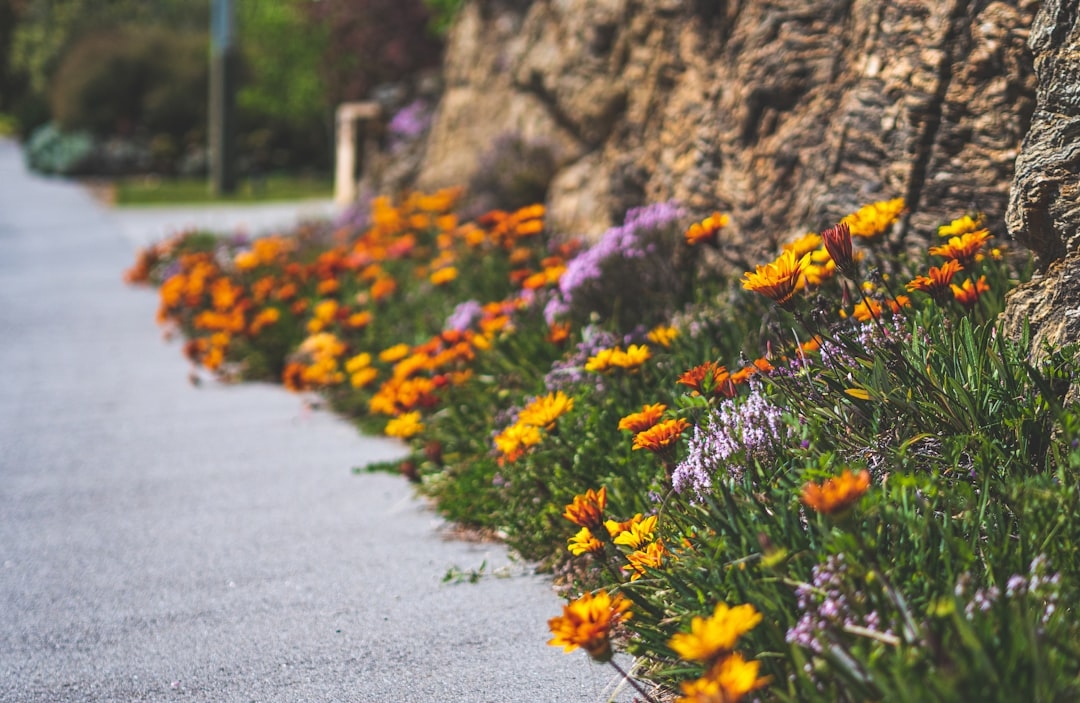
Marigolds are the best annual on this list — yes, they need replanting, but a six-pack costs about $3 at any big-box store and they bloom from spring frost to fall frost with almost no deadheading required in modern varieties. They also naturally repel aphids and whiteflies, which cuts down on pest management for everything planted nearby.
Lavender (Lavandula angustifolia)
Once established in well-drained soil and full sun, lavender asks for almost nothing. It’s drought-resistant, deer-resistant, and attracts bees like nothing else in the garden. ‘Hidcote’ and ‘Munstead’ are the most reliable compact varieties for US gardens (zones 5–8). One caution: lavender hates wet feet, so avoid clay-heavy soil or add grit when planting.
Daylilies (Hemerocallis)
Daylilies earn their reputation. They spread slowly on their own, tolerate a wide range of soil conditions, and produce hundreds of blooms per clump over a 4–6 week season. The variety ‘Stella de Oro’ blooms repeatedly through summer — not just once. Zones 3–9, full sun to partial shade.
Practical Tips for Getting the Most Out of Easy-Care Blooms
- Mulch everything. A 2–3 inch layer of wood chip mulch suppresses weeds and retains moisture, cutting your watering frequency roughly in half.
- Plant in odd numbers. Groups of three or five look fuller and more natural than single plants, and they’re more resilient as a cluster.
- Water deeply, not daily. One slow, deep watering per week trains roots to go deep. Shallow daily watering produces shallow roots that stress quickly in heat.
- Skip the fertilizer in year one. Native and adapted plants often perform better in leaner soil. Heavy fertilizing pushes leafy growth at the expense of blooms.
- Buy locally grown starts when possible. Plants grown at a local nursery are already adapted to your regional climate. They establish faster and cost the same or less than shipped alternatives.
Eco-Friendly Choices That Help the Whole Yard
Choosing native or adapted low maintenance flowers doesn’t just save you time — it actively benefits your local ecosystem. Coneflowers and black-eyed Susans, for example, are among the top 10 plants recommended by the National Wildlife Federation for supporting native bee populations. Lavender’s flower spikes provide nectar during summer months when many other flowers have faded.
If you’re gardening on a budget, consider starting from seed. A $3 packet of Echinacea seeds can produce 50+ plants — far more cost-effective than buying starts. Seeds take one extra season to bloom but establish strong root systems that outperform transplants over time.
Frequently Asked Questions
What are the easiest flowers to grow for beginners?
Marigolds, black-eyed Susans, and daylilies are the three easiest flowers for beginners. They tolerate beginner mistakes like inconsistent watering, require no pruning knowledge, and bloom reliably in their first season.
What low maintenance flowers come back every year?
Perennials like coneflowers, daylilies, lavender, and black-eyed Susans return each year without replanting. Most are hardy in USDA zones 3–9 and improve in size and bloom count with each passing season.
What flowers need the least water?
Lavender, coneflowers, and black-eyed Susans are among the most drought-tolerant once established (typically after their first full growing season). They can survive on natural rainfall in most US climates after year one.
Can low maintenance flowers grow in poor soil?
Yes. Native plants like coneflowers and black-eyed Susans evolved in lean prairie soils and actually perform better without rich amendments. Marigolds and daylilies are also highly adaptable to average or poor garden soil.
How do I keep low maintenance flowers blooming longer?
For annuals like marigolds, remove spent blooms to encourage new flower production. For perennials, cutting back foliage in early spring (not fall) helps them emerge cleanly. Dividing overgrown clumps every 3–4 years also refreshes bloom performance.
Your Next Step
Pick one or two plants from this list and start there. You don’t need to overhaul your entire yard at once — even a small patch of coneflowers or a border of marigolds can completely change how your outdoor space feels. Check your USDA hardiness zone at the USDA Plant Hardiness Zone Map website, match it to the options above, and head to your local garden center this weekend. Spring planting windows open early, and the good starts sell out fast.