
Contents:
- Why Bees Are Selective About Which Flowers They Visit
- Top Flowers That Attract Bees for Pollination
- Lavender (Lavandula angustifolia)
- Phacelia (Phacelia tanacetifolia)
- Borage (Borago officinalis)
- Coneflower (Echinacea purpurea)
- Catmint (Nepeta × faassenii)
- Sunflower (Helianthus annuus)
- Native Plants vs. Non-Native Bee Flowers: What’s the Difference?
- A Common Confusion: Butterfly Flowers vs. Bee Flowers
- Practical Tips for Designing a Bee-Friendly Garden
- FAQ: Flowers That Attract Bees for Pollination
- What flowers attract bees the most?
- Do bees prefer native or non-native flowers?
- What color flowers are most attractive to bees?
- How do I keep bees coming back to my garden all season?
- Are double-flowered plants bad for bees?
- Build Your Pollinator Garden This Season
What if the secret to a thriving garden wasn’t about perfect soil or ideal sunlight — but about who you invite in? Choosing the right flowers to attract bees for pollination can transform a quiet backyard into a buzzing, productive ecosystem where vegetables fruit more abundantly, wildflowers self-seed reliably, and the entire garden hums with life. But not all flowering plants are created equal in the eyes of a foraging bee. Shape, color, scent, and bloom timing all influence which species show up — and how often.
Why Bees Are Selective About Which Flowers They Visit
Bees aren’t random in their choices. They’re efficient foragers that evaluate a flower’s reward — primarily nectar and pollen — against the energy cost of reaching it. Native bee species like bumblebees, mason bees, and sweat bees have evolved alongside specific plant families over thousands of years. Honeybees, while generalists, still show strong preferences based on flower architecture and UV light patterns invisible to the human eye.
Color matters enormously. Bees see in the ultraviolet spectrum and are most strongly attracted to blue, violet, yellow, and white blooms. Red flowers are largely invisible to most bee species, which is why red-flowering plants like scarlet salvia often attract hummingbirds instead. Flower shape also plays a role: open, single-petaled blooms give bees direct access to pollen and nectar, while highly bred double flowers — like many modern roses — often have their reproductive structures buried or eliminated entirely.
Bloom time is a third factor many gardeners overlook. A garden that offers flowers only in June leaves pollinators without support for the other eight months of the year. The most bee-friendly gardens stagger flowering from early March through late October.
Top Flowers That Attract Bees for Pollination
The following plants consistently rank among the most effective bee attractors in North American gardens, based on foraging frequency data and pollinator habitat research.
Lavender (Lavandula angustifolia)
Few plants outperform lavender for raw bee-attracting power. Studies from the University of Sussex found lavender ranked among the top three plants visited by bees in garden trials. Its tubular florets produce high-quality nectar, and its long bloom period — typically June through August in USDA Zones 5–8 — makes it a reliable mid-season resource. Plant it in full sun in well-drained soil. A mature clump of ‘Hidcote’ or ‘Munstead’ lavender can host dozens of bee visits per hour on a warm afternoon.
Phacelia (Phacelia tanacetifolia)
Phacelia is perhaps the most underused annual in American gardens. In European pollinator trials, it attracted more bees per square meter than almost any other tested plant. Its blue-violet, coiled flower clusters bloom for 8–10 weeks and produce abundant, accessible nectar. Sow directly in early spring — it germinates in 7–14 days and thrives in Zones 3–9. It’s an especially strong choice for vegetable garden borders where you want to maximize pollinator activity near crops.
Borage (Borago officinalis)
Borage blooms in star-shaped blue flowers that bees visit with unusual frequency. The plant self-seeds freely, meaning a single planting can establish a self-perpetuating colony. It grows quickly from seed, reaching flowering in about 8 weeks, and thrives in poor to average soil. Borage also has practical kitchen uses — its flowers are edible and mildly cucumber-flavored — making it a dual-purpose addition to any garden.
Coneflower (Echinacea purpurea)
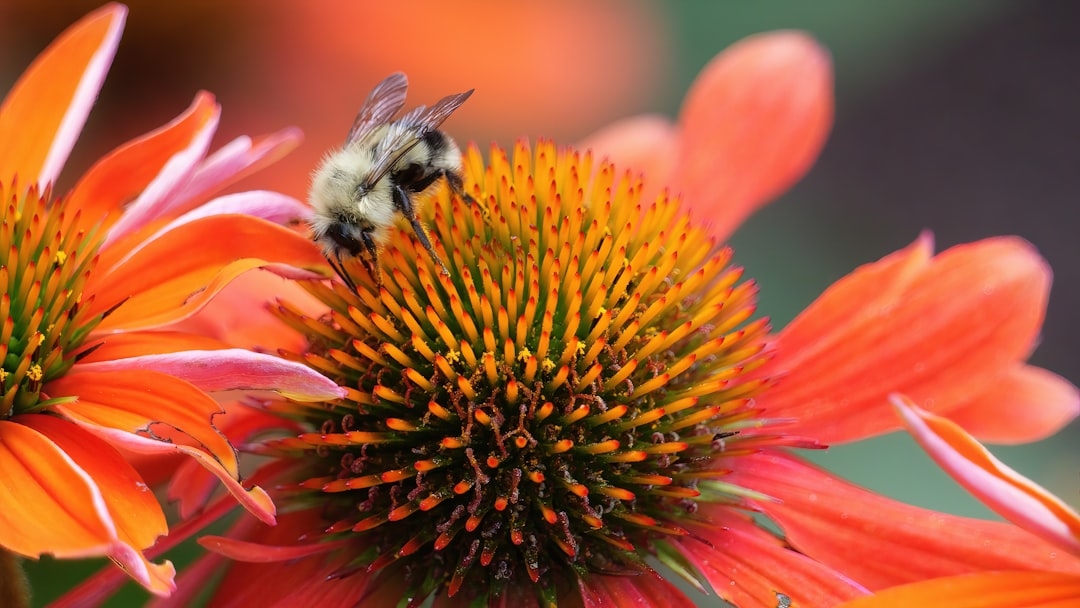
Native to the eastern and central United States, purple coneflower is a workhorse for late-summer pollination when many other blooms have faded. Its raised central cone offers a landing platform and pollen source for both bumblebees and smaller native bee species. Plants in Zones 3–9 bloom from July through September, and the dried seed heads feed birds through winter. Choose straight species over heavily hybridized varieties — some newer cultivars with highly doubled petals produce less pollen.
Catmint (Nepeta × faassenii)
Catmint blooms in lavender-blue spikes from late spring into fall, especially if cut back after the first flush. It’s drought-tolerant once established, deer-resistant, and produces nectar continuously across a long season. ‘Walker’s Low’, despite its name, grows 24–36 inches tall and spreads generously, making it one of the most reliable mass-planting options for pollinator gardens in Zones 4–8.
Sunflower (Helianthus annuus)
Single-headed sunflower varieties — particularly open-pollinated types like ‘Lemon Queen’ and ‘Autumn Beauty’ — provide extraordinary pollen yield. A single sunflower head is actually composed of hundreds of tiny individual flowers, each producing pollen. Bumblebees in particular are highly efficient sunflower foragers. Avoid “pollenless” sunflower cultivars bred for the cut flower trade, which offer bees nothing of value.
Native Plants vs. Non-Native Bee Flowers: What’s the Difference?
A common point of confusion among gardeners is whether native plants always outperform non-native species for pollinator support. The answer is nuanced. Native plants like coneflower, wild bergamot (Monarda fistulosa), and goldenrod have co-evolved with native bee species and often support a broader range of specialist pollinators. However, well-chosen non-natives like lavender and borage can still attract and feed generalist bees effectively.
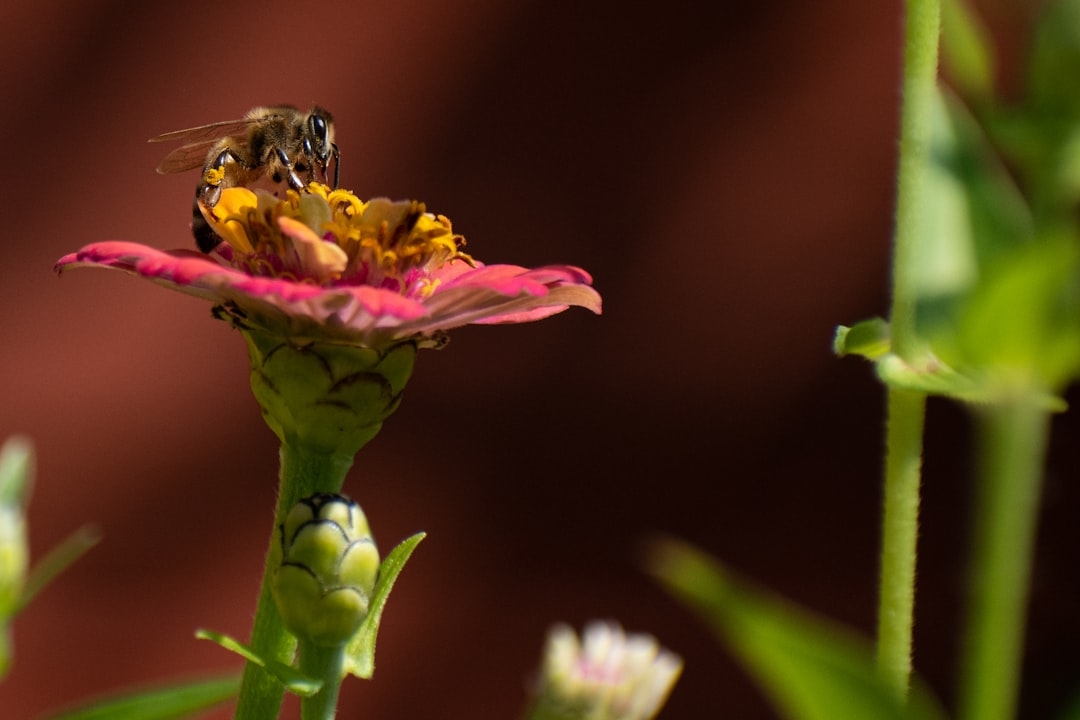
The key distinction: native plants support specialist bees that cannot survive on non-native pollen, while non-natives typically attract only generalists. For maximum biodiversity impact, aim for a garden that’s at least 50–70% native species. The Xerces Society recommends including a minimum of three native flowering species per season — spring, summer, and fall — as a baseline for meaningful pollinator habitat.
A Common Confusion: Butterfly Flowers vs. Bee Flowers
Many gardeners assume that any pollinator garden serves both butterflies and bees equally well. In practice, the two groups have different preferences. Butterflies favor flat-topped flower clusters like lantana, zinnias, and butterfly bush (Buddleja davidii), which allow them to land and feed easily. Bees, by contrast, prefer tubular or cup-shaped flowers with accessible anthers.
Butterfly bush is a telling example. It’s visually impressive and undeniably attractive to butterflies, but it produces little to no pollen — making it nearly useless for bees seeking protein. It’s also invasive in many US states. Swapping butterfly bush for native Ceanothus or buttonbush (Cephalanthus occidentalis) would better serve both bee and butterfly populations simultaneously.
Practical Tips for Designing a Bee-Friendly Garden
“The single biggest mistake I see is planting one or two bee-friendly flowers in isolation,” says Dr. Mara Ellison, a certified horticulturist and pollinator habitat consultant based in Portland, Oregon. “Bees forage efficiently — they want patches, not individual plants. A 3-foot-by-6-foot mass planting of catmint will attract twenty times more activity than six scattered single plants of six different species.”
- Plant in masses: Group a minimum of three to five plants of the same species together. Visibility and scent concentration both increase with patch size.
- Avoid pesticides during bloom: Even “bee-safe” systemic insecticides can persist in pollen and nectar. If treatment is necessary, apply in the evening when bees are inactive.
- Provide a water source: A shallow dish with pebbles and clean water placed near bee-friendly plantings supports foraging bees, especially during summer heat.
- Layer bloom times: Aim for at least one species blooming in each of three periods: early spring (crocus, Siberian squill), summer (lavender, borage, coneflower), and fall (goldenrod, aster, sedum).
- Leave some bare soil: Around 70% of North American native bee species are ground-nesters. A small patch of undisturbed, lightly compacted soil gives mining bees a place to nest near their forage.
FAQ: Flowers That Attract Bees for Pollination
What flowers attract bees the most?
Lavender, phacelia, borage, coneflower, and catmint consistently rank among the highest bee-visited plants in garden trials. Single-flowered varieties with open, accessible pollen and nectar outperform heavily hybridized double-flowered cultivars.
Do bees prefer native or non-native flowers?
Native flowers support the widest range of bee species, including specialists. Non-native plants like lavender and borage can attract generalist bees effectively. A mixed garden of 50–70% native species provides the best results for overall pollinator diversity.
What color flowers are most attractive to bees?
Bees are most attracted to blue, violet, yellow, and white flowers. They perceive ultraviolet light and are largely unable to see red wavelengths, making red flowers poor choices for bee-focused pollinator gardens.
How do I keep bees coming back to my garden all season?
Stagger your plantings to provide continuous bloom from early spring through fall. Include at least one early bloomer (crocus or hellebore), several summer-flowering species, and late-season plants like goldenrod and asters to bridge the fall gap before frost.
Are double-flowered plants bad for bees?
Many double-flowered cultivars have reduced or eliminated pollen and nectar due to selective breeding. Bees may still visit them but gain little nutrition. Always choose single-flowered or open-pollinated varieties when pollinator support is a priority.
Build Your Pollinator Garden This Season
Getting started is straightforward: pick two or three species from this list that suit your zone and sun conditions, plant them in generous groupings, and observe which local bee species show up. Keep a simple journal of what you see — it takes only a season to notice which plants in your specific microclimate generate the most activity. From there, you can expand intentionally, layering in early and late bloomers to extend your garden’s value. The bees will show you what’s working.